How to Start Collecting CDs: A Beginner’s Guide
Understanding the format and how to begin a collection
Last updated March 2026
Something has clicked in your mind and you are thinking about starting to collect CDs. This article will explain some basics to help you get started on your new hobby. I will assume you know virtually nothing about CDs and keep this at a fairly basic level. When you are ready, feel free to go back to the home page and view some more advanced articles.
What is a CD
CD stands for compact disc and is an audio format used mainly for music but also other audio. The CD was the main method used to distribute music from about 1985 through about 2005. Prior to the CD other formats dominated including vinyl records and cassette tapes. After the mid 2000s use of CDs began to decline as mp3 and streaming became more popular.
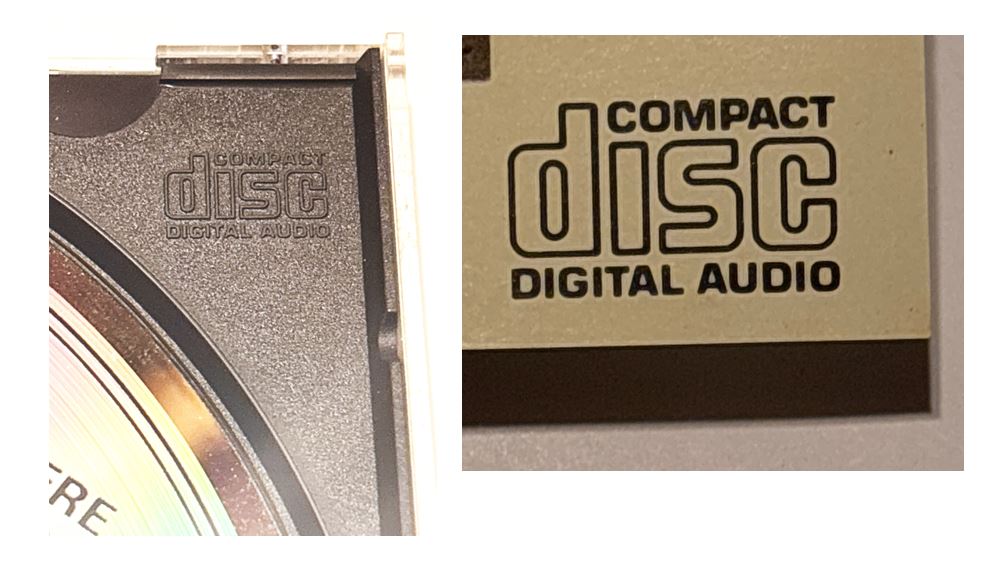
The CD is a 4.7 inch diameter plastic disc, appearing shiny silver on one side and usually with a screen printed label on the other side. The CD can hold about 75 minutes of recorded sound. The same physical form was also used for data CDs which is something different and not covered here. They are the same size as a DVD. A CD, or the packaging will usually have a digital audio compact disc logo somewhere on the CD or the packaging.
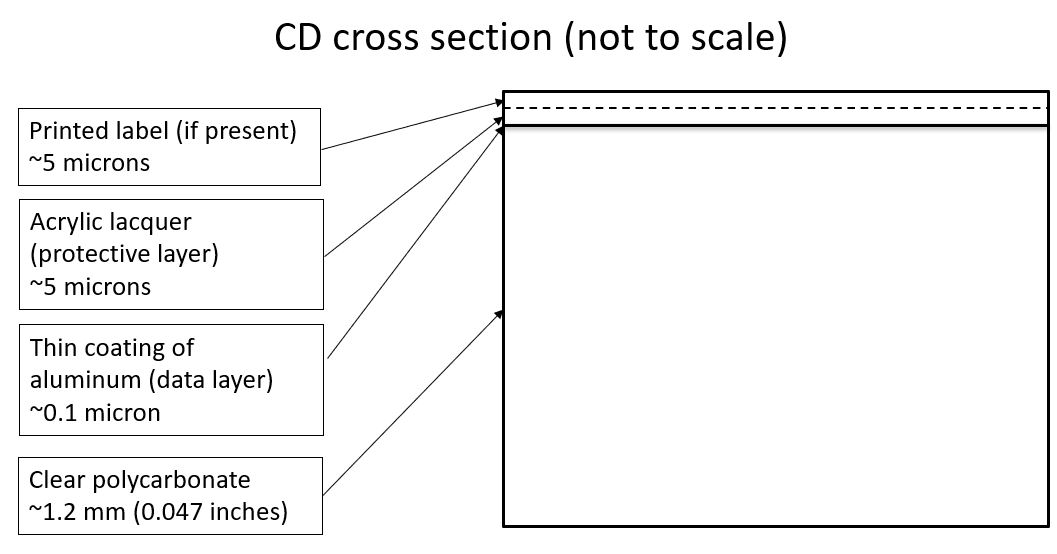
A CD is made of a clear polycarbonate disc about 1.2 mm thick, with a thin layer of aluminum, which is coated with a thin layer of an acrylic lacquer. Then the disc is usually screen printed with an ink label.
The music itself is encoded as pits between the aluminum and polycarbonate layers. A CD player works by shining a small, focused laser beam through the clear plastic, reflecting off the aluminum layer to read the data.
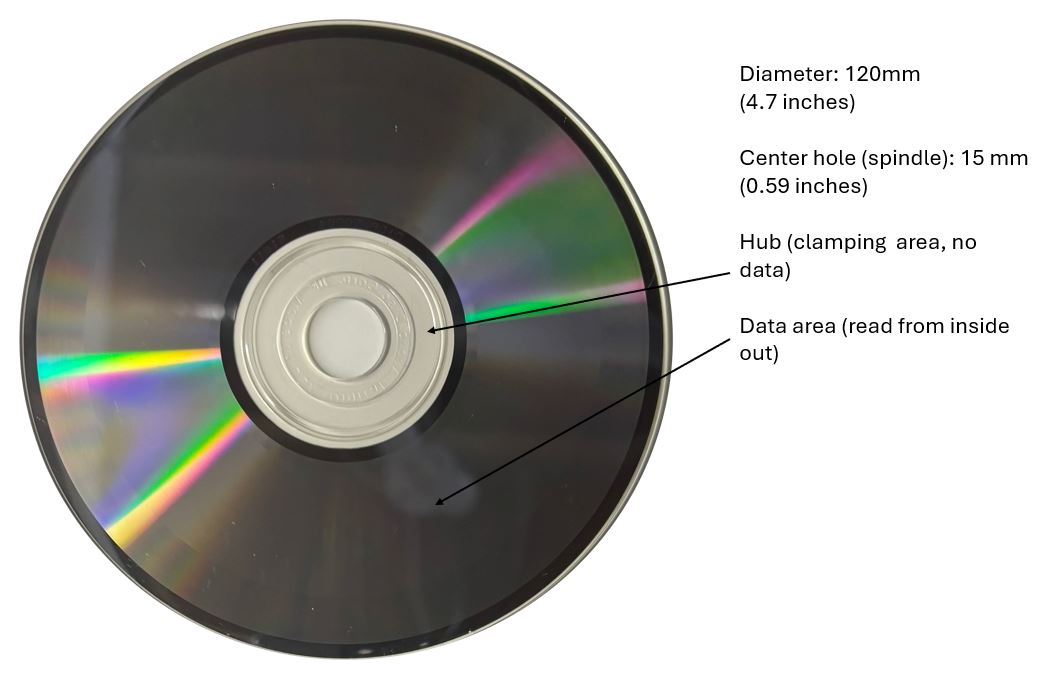
How to play a CD
There are surprisingly many options. CDs are often played in dedicated CD players, which are still being made, or which can be purchased very inexpensively at thrift or garage sales. A standalone CD player may require a stereo system with an amplifier to use. Alternatively, there are CD/radio/cassette boombox style players with built in speakers, or fully self contained all-in-one systems. Portable players (Discman style) can be used with headphones, and many cars made up to about the 2020 model year have a built in CD player.
When getting a used player it is best to check that it is working first. Most DVD and Blu-ray players will also play CDs, as will most CD rom drives in computers.
CDs are still in production
CDs are still being manufactured but at much lower quantities than during their heyday. An incredible variety of music and spoken word is available including not just new material released during the dominant years of the CD, but also older material, called back catalog, which was originally on vinyl but later rereleased onto CD.
Most CDs are housed in a protective hinged plastic case, although other packaging types exist.
Why collect CDs
The decision to collect CDs is a personal choice but there are many reasons why someone might do this.
The CD is renowned, to this day, for having excellent sound quality, equal or surpassing what the human ear is capable of hearing. Some music on streaming has been edited, or is not available at all, or becomes unavailable. Owning the CD ensures the listener has the music forever.
The joy of collecting
CDs are a tangible product, often with eye pleasing designs that can be displayed and shared. Depending on a person’s age nostalgia may also be a factor. Building a collection can be a satisfying pursuit much as with any other collectible.
CDs are widely available, often at very low prices for used copies. Many believe this is perhaps the best time to start a CD collection.
For many collectors the appeal is not just the music itself, but owning an actual physical CD along with the case and booklet. Similar to stamp or baseball card collecting, a picture of the item would not be satisfying. Collectors want the real artifact.
The artist’s true intent
The CD allows the fan to experience an artist’s full creative vision. The original, unedited album sequence, accompanied by the artwork, photographs and lyrics often appearing in the booklet. This enriches the listening experience and fosters a deeper connection to the music.
Where to get CDs today
Building a CD collection today is easier and more affordable than you might think. CDs can be found in many places, from secondhand shops and community sales to online marketplaces, as discussed in used CD hunting, or traditional retail stores or directly from artist websites.
Prices vary depending on where you look but many collectors are surprised at how inexpensive CDs have become in the used market. Below are some of the most common places to find them, listed roughly from lowest to highest cost.
- Friends, parents often free
- Garage sales less than $1 each
- Thrift stores (Goodwill, Salvation Army, Savers) $1-3$
- Flea markets $1-3$
- Record Stores $3-$6 for most used titles
- Online retailers or auction sites (eBay, Amazon, Discogs) $5-$10 for many common titles
- Artist websites or new releases $10-$20
Many experienced collectors on a budget focus on private sales such as garage and estate sales where entire collections appear at once, and usually at lower prices. But these venues are unpredictable.
One reason prices are often low is that CDs were produced in very high volume during their peak years, however, some rarer titles appear.
When buying used CDs it is good practice to quickly check the condition of the disc. Avoid those with heavy scratches and verify that the correct CD is actually inside the case.
CD packaging
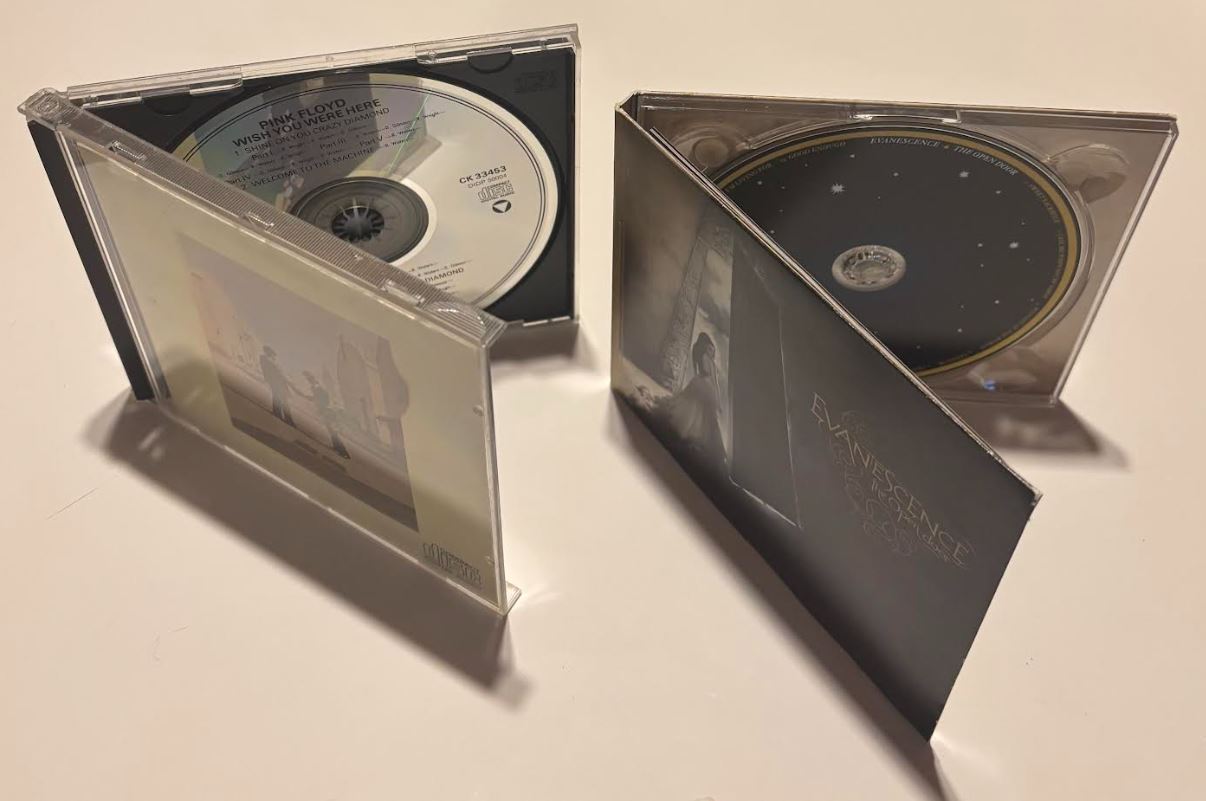
CDs are housed in many types of packaging. The most common is the jewel case, the familiar hinged plastic case. The jewel case has room for a small booklet, and artwork on the back. A later development was the digipak, which has a plastic tray to hold the CD but is otherwise made of cardboard. There are many other variations including multi CD holders.
CD condition
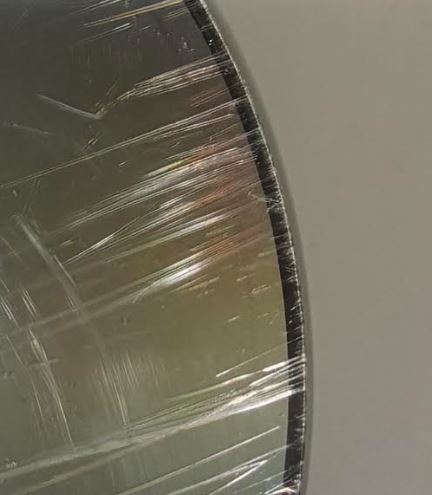
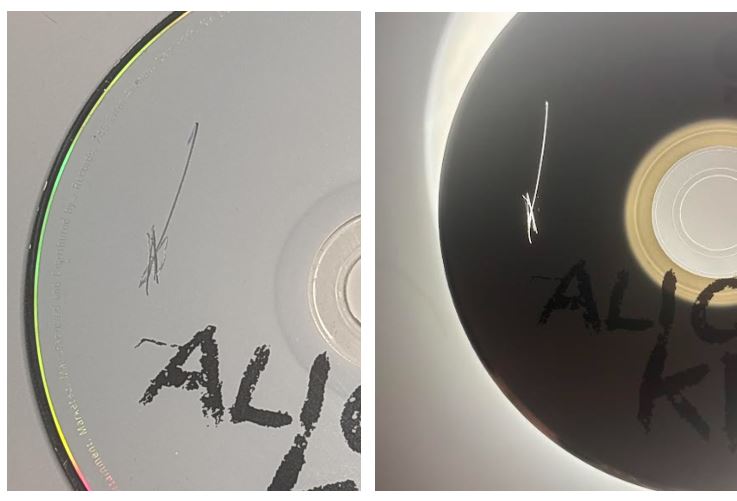
The CD is very durable. One early TV advertisement showed one getting runover by a truck and still working. Most CDs still work fine even with a considerable amount of scratching on the shiny side. A scratch on the label side can remove part of the aluminum layer containing data, and such damage is usually catastrophic. The same is true for actual cracks in the plastic.
It is not possible to tell for sure if a scratched CD will play without testing it. Light scratches rarely cause a problem, but deeper scratches are another story.
Scratched discs can sometimes be polished on the shiny side of the disc to make them playable. This is something that is common in the disc based video game market where severely scratched discs seem to be more common. There are specialized machines that can do this, or there are home based remedies. Overall this is a last resort and won’t be covered here.
Collector versus listener
A distinction should be made between what serious CD collectors value versus casual listeners. The serious collector wants a disc with no scratches, not even light marks. They are looking for a visually pristine copy. Likewise for condition of the booklet. Less so for the case because plastic cases can often be replaced. But cardboard cases printed with artwork cannot be replaced. A scratched CD may be fine for listening but is not usually considered collectible.
There are rating systems, using terms like near mint, very good, etc. Basically they describe ever increasing amount of scratches on the shiny side.
CD handling and cleaning
CDs should be handled by one finger in the center hole, and thumb on the outside rim. Avoid touching the playing surface as this will leave fingerprints.
Cleaning is possible but should be done with extreme caution. In general it is best to avoid cleaning unless necessary. Physically touching the CD surface risks creating scratches. The shiny side of the CD is extremely susceptible to scratching, and even light scratches are visible. If absolutely necessary, use water and a tiny amount of dish soap with a clean microfiber cloth, or a finger under running water, wiping very gently with little pressure from the center to the outside. Rinse with distilled water and let the disc air dry. Careful cleaning can still leave light marks, which may affect collectible value.
There are a number of online resources that describe CD cleaning in more detail.
CD values
Used CDs usually sell for only a few dollars at retail for example at a used record store. The price the store will pay is going to be much less than that. There are occasional discs with higher value, mainly due to rarity.
One way to determine value is look up sold prices on eBay or Discogs.
Stories online of CDs worth hundreds or thousands of dollars are extraordinarily uncommon in real life.
Things to watch out for
There are a few traps to look out for when collecting CDs.
One issue is most collectors avoid homemade copies, burned onto CD-R, which was a fairly common practice in the CD era. A CD-R can be identified by a slight green, blue, or purple tint on the shiny side. A factory pressed CD will be a pure silver color.
Bulk buys of undesirable CDs. A trip to a thrift store will often reveal hundreds of CDs that almost no one wants. For a new collector the best approach is probably to buy music that you like and want to collect. Then you should be happy with it no matter what anyone else thinks.
Summary
This short article has given the beginner a few pointers to getting started in the hobby. There are many details and nuances not covered here. Whether you’re rediscovering old favorites or learning about CDs for the first time, your journey in CD collecting can be one of passion and discovery. Keep searching, keep collecting, and, above all, keep the music alive. Happy collecting!