The CD and Cassette Ecosystem.
How blank tapes supported the CD era and became collectibles in their own right.
Last updated March 2026
From the moment CDs appeared, CDs and cassettes were closely intertwined. One factor that increased the attractiveness of CDs for many people was the ability to make copies onto tape. Until portable CD players with suitable buffering became common in the mid 1990s , the primary portable listening format was still the cassette. Creating tape copies of their own CDs greatly increased the usefulness of the format.
Although the CD is often seen as the mortal enemy of the cassette, the rise of home CD copying actually triggered a historic boom in blank tape sales. The tape industry did not hide the connection. Tapes often advertised themselves as engineered specifically for making copies of CDs with the tape frequency response, even tape length, optimized for CD copying. This demand pushed cassette technology to its peak ushering in what is now considered the golden era of high performance blank tape production.

The fidelity of the tape copies could rival that of the original CD when using high quality equipment, tapes, and Dolby noise reduction.
Home taping and CD demand
Not everyone supported home taping. To the music industry, it was seen as an existential threat, famously summed up by the warning "Home Taping Is Killing Music."
Ironically, during this same era CD production soared to levels far beyond anything seen with previous formats. Is it possible the availability of home CD copying actually increased demand for CDs? After all, being able to make near perfect copies certainly increased the utility of the CD.
Certainly some people copied CDs from friends or borrowed CDs from the library. But were those people ever going to purchase the CD anyway?
While cassette taping ultimately did not have the impact the industry feared, and may have even helped it, the advent of the MP3s and music file sharing would later have a major negative impact on CD sales. Eventually it was file sharing that truly "killed" the CD.
Such was the industry's concern about home taping that they successfully lobbied for government imposed taxes on blank DAT media and recorders hoping to deter consumers from making perfect digital copies. This effectively stifled the market for DAT technology which was then confined largely to the prosumer and professional market.
From utility to collectibility
Blank tapes (cassettes sold for home recording) have developed their own thriving collector community that is an interesting adjunct to CD collecting. Generally, as a collectible, enthusiasts are interested in sealed, (therefore obviously unused and blank) examples. As cassette technology improved the selection and quality of blank tapes became highly refined. Naturally, as cassette use declined the number of manufacturers and variety of products also declined.
To someone who lived through the era, a stack of blank tapes, often in their metallic gold wrappers, evokes a strong sense of nostalgia.
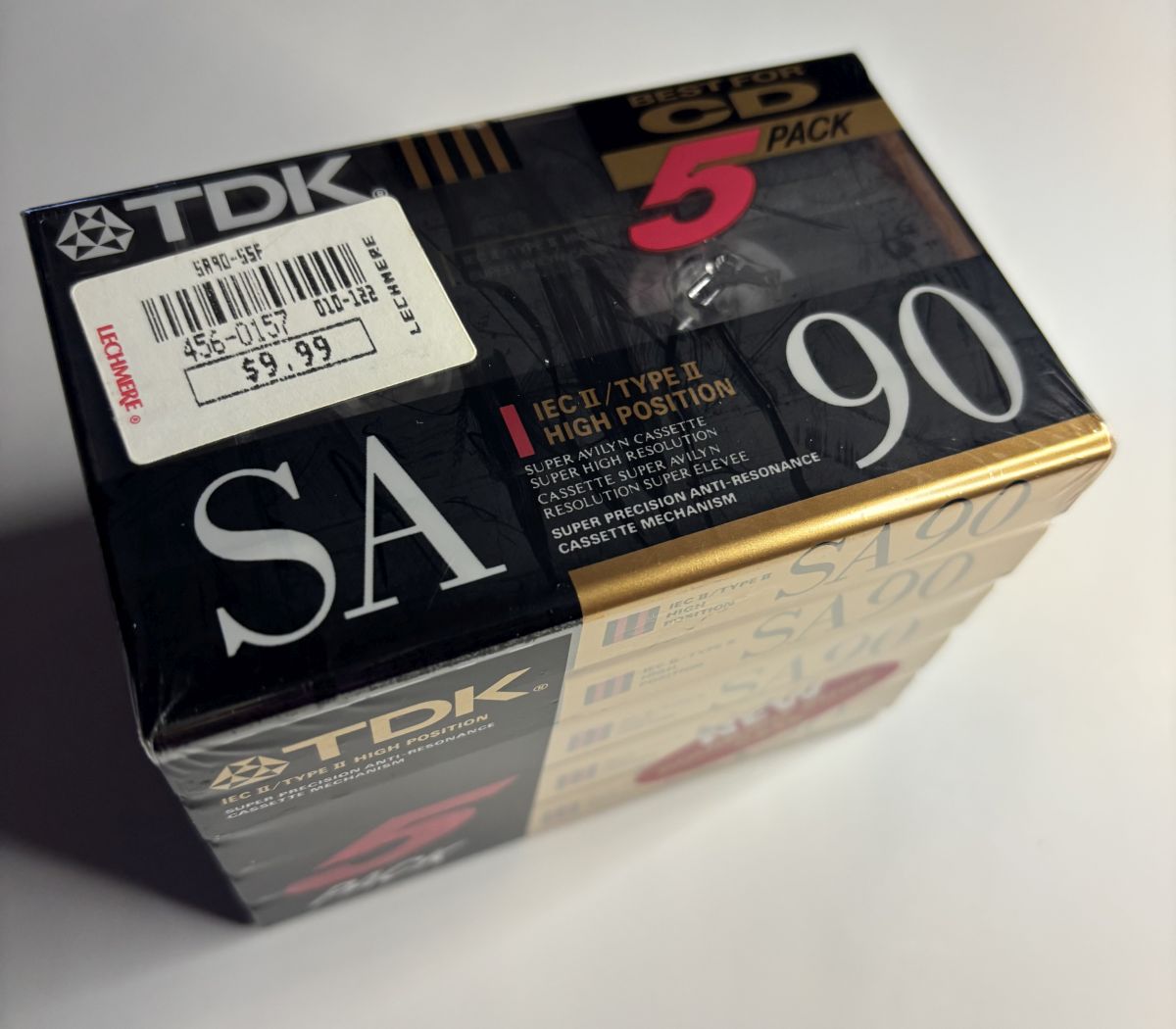
Collecting Blank Cassette Tapes
Today there are a handful of manufacturers of cassette tapes often using tape stock sourced from China, but in a testament to the quality of the vintage tapes the consensus is that the quality of currently manufactured products is not equal to that of tapes made in the 1980s to 90s. This is especially true for Type II and IV cassettes which are no longer made.
While blank tapes available to the home user advanced with development of premium products with higher performance chemistry and improved cassette shells, pre-recorded music was, with few exceptions, limited to the original tape formulation (Type I) and lower cost shells.
Tapes were usually sold with colorful, informative plastic wrappers. Sometimes these individually wrapped tapes were then put into "bricks" of usually 4 or 5 although counts of 2-20 are found. The brick itself had additional advertising or information on its wrap. Today most blank tape collectors focus their interest in unopened examples of single tapes. The collectability, as determined by price can drop by tenfold or more when one of these sealed cassettes is opened. The practical result of this is that, except in unusual situations, used blank tapes hold very little value. This does create an opportunity for someone to get a collection of opened blank tapes at low cost. A collection of opened blanks can make a nice companion to a sealed tape collection. Opaque packaging usually prevents collectors from even seeing what the blank tape shell looks like inside.
The majority of collectors prefer to keep blank tapes sealed as collectibles, preserving their condition and value. However, there remains a dedicated group of taping enthusiasts who open and use these tapes just as they were originally intended, for making personal recordings and enjoying the hands-on experience of cassette recording.
Condition and storage
As a guide the hierarchy of blank tape condition is roughly:
- Sealed, unopened
- Sealed, but damaged wrapping
- Opened with label sticker still unused, record tabs still intact, and no writing on J-card.
- Used tapes, with varying levels of labeling and wear.
Most used blank tapes are likely perfectly functional and can be recorded over to make new recordings if desired.
The storage history of any particular blank tape is usually not known. Even a sealed tape that appears visually to be in great condition could have been stored in a way where the tape media degraded for example, a garage or unconditioned basement. Even so, when a tape appears visually well preserved, the odds are somewhat better that the tape media itself is still in good condition.
Blank tape value depends on rarity and demand. Usually Type IV and Type III tapes are most valuable followed by Type II, then Type I. At equal condition, older tapes are usually more desirable to a collector due to fewer sealed survivors available.
Manufacturers and marketing
During the peak era of cassettes blank tapes were a highly competitive market and manufacturers changed product specifications and designs on a near yearly basis. There are several online pictorial guides showing examples of tapes by year from most manufacturers
Collectors take note of things like where the tape stock was made (Japan, Malaysia, South Korea, Germany) and where the tape was assembled (for example, Mexico was common for US market). Made in Japan or Germany is believed by many to indicate the highest quality, but the truth is that manufacturers generally had pretty good control of their products and good tapes could come from anywhere.
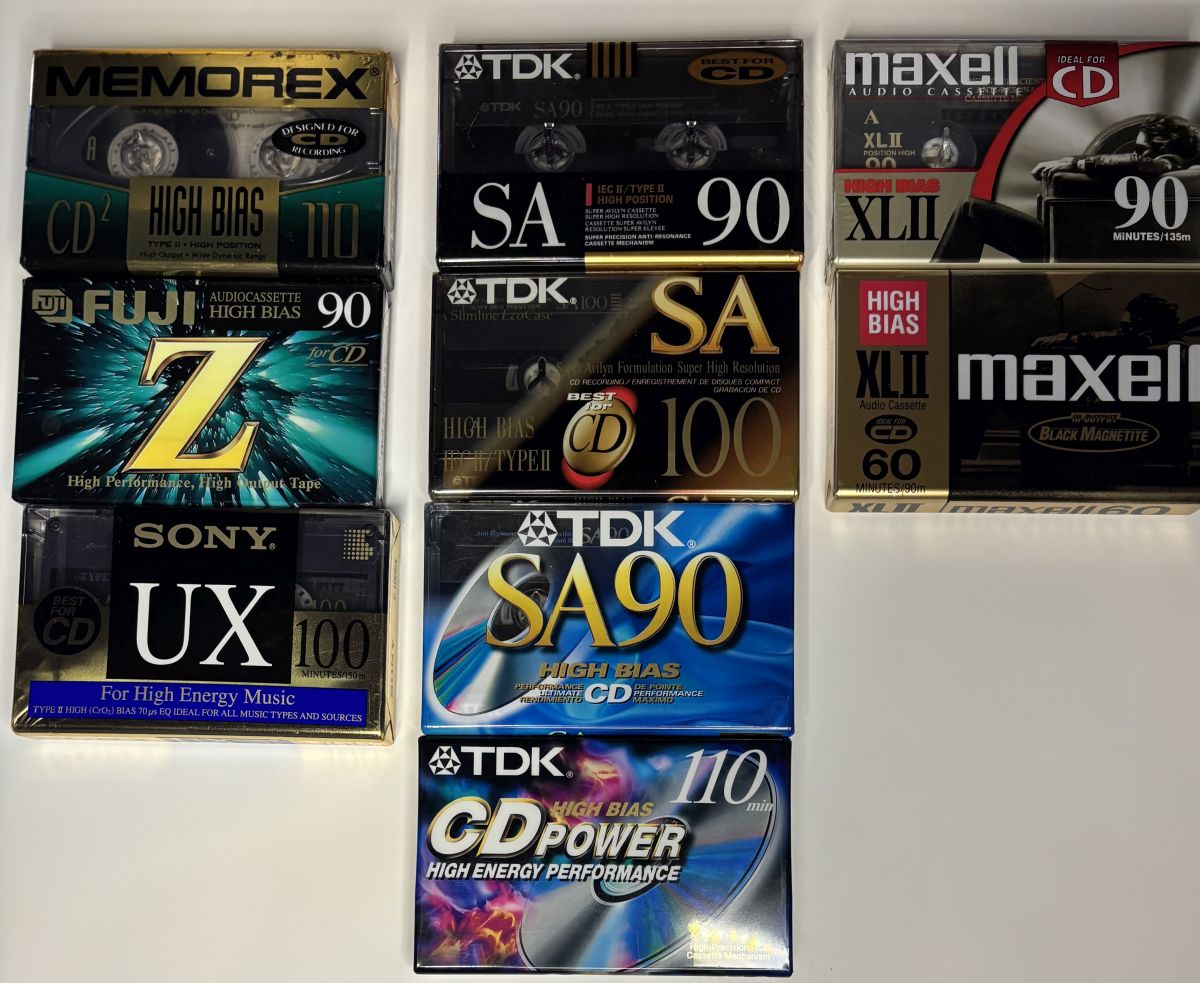
Most of the major high end tape manufacturers highlighted how their tapes were optimized for CDs. Often "CD" even appeared in the name of the cassette.
At the height of the cassette tape era some manufacturers made perhaps a dozen different products including low, mid, and high performance versions of Type I, II, and IV. Also it was not unusual for specialty tapes for use in duplication, computer program storage, or other uses to be made.
By the early 2000's tapes had become filled with all sorts of marketing hype and continuous redesign and it is difficult to know exactly how good a tape is without referencing guides that tested the tapes under controlled conditions.
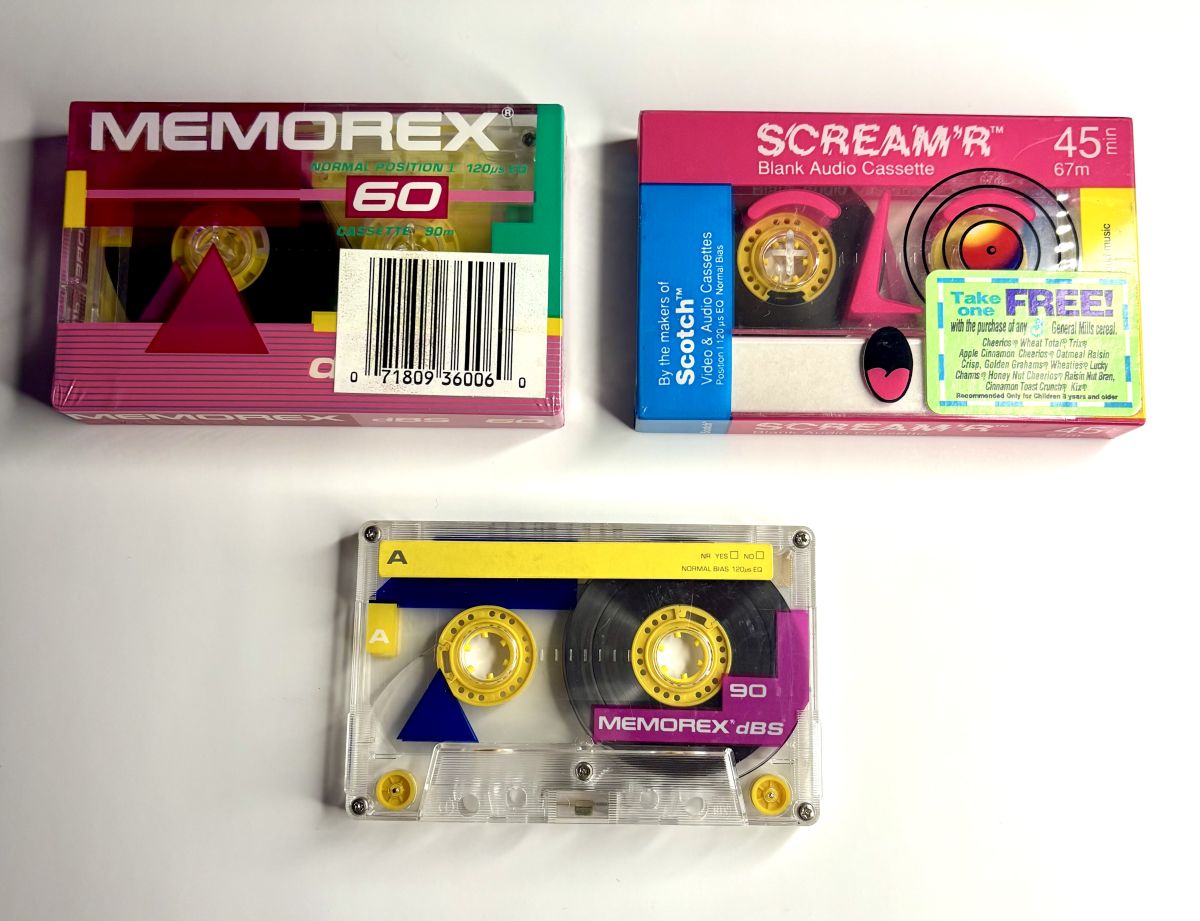
Often the better performing tapes are more desired, but there are some interesting oddities. For example, the Memorex DBS, sometimes referred to by collectors as the "Clown Cassette", and its cousin the 3M Scream'r have a following in collector circles due to their vibrant color schemes emblematic of 1990s design.
The dominant manufacturers and technology leaders of the blank tape world were TDK and Maxell, with Sony and BASF close behind. Other notable manufacturers include Fuji, Memorex, and later entrants like Saehan, SKC and That's. As cassette tape production declined some manufacturers began to outsource and the actual manufacturer of a cassette is sometimes unknown regardless of the brand name printed on the wrapper.
Current market and production
Current (2026) values for vintage sealed blank tapes vary widely due to availability of any specific tape issue, but as a general guideline based on eBay sales Type I can be found for about $1-$2, Type II $5-$10, and Type IV $25-$50.
Today cassette tape manufacturing still exists but on a smaller scale. Maxell still sells a Type I tape which continues to carry the designation UR although the source of the magnetic tape is unclear. National Audio Company in the US and Recording the Masters in France also make magnetic tape. This is all Type I formulation, although there are reports of National Audio working on a Type II formulation.
What does this mean for the CD collector?
Blank tapes and used CDs often turn up at the same places. For more information on where to find them see this article: Used CD Hunting
The cassette and CD were more closely linked than they may seem at first glance. Understanding that relationship can deepen a collector's appreciation of the CD format.