CD Mastering Differences: A Collector's Perspective
A fascinating and often overlooked aspect of compact discs (CDs) is that not all of them sound the same even when they contain the same music. The difference is due to remastering. To the casual listener the music sounds the same. To the audiophile with an extremely discriminating ear, they may hear differences and favor one version over another. To the collector, especially one focused on a particular artist, they want a copy of all versions. Not because it is logical, but it is what collectors do.
So why are there often so many different versions? Most music recorded before about the mid 1990s was originally recorded on analog tape. To get the music onto a CD, the analog recording is first digitized. While the original master tapes can simply be played through an analog-to-digital converter to create the digital file, there is also an opportunity to adjust things such as increasing overall volume, boosting the bass or treble, reducing tape hiss, or making any of a myriad of other adjustments. This type of alteration to the music is called remastering.
As the CD industry matured, many popular albums were subjected to remastering several times. For many collectors seeking an example of each version, only two to four different CD releases are usually needed for each album. The following discussion will explore how these different masterings came about, how to identify them, and what fans and collectors think about them.
Background - Vinyl Mastering
To understand mastering we need to go back to the vinyl era and see how audio recordings were handled. From the 1950s until the widespread use of digital recording in the late 1980s, music was usually recorded onto analog tape. Ultimately a final two-track master was produced which was meant to realize the vision of the artist and ensure sonic quality of the vocals and instruments, good stereo balance, etc., but not optimized specifically for any audio format.
For example, if the signal level on the tape was too loud, or if bass level was too high, the needle on a record player could actually jump the groove. Therefore the vinyl cutting engineer might introduce some equalization changes - to reduce bass, for example - to reduce the risk of groove jumping. There was a real art in making the best vinyl record from the master tapes.
One famous example is the RL version of Led Zeppelin II. Bob Ludwig, the mastering engineer, made the first version, now known as the so-called "hot mix." Zeppelin enthusiasts consider this the ultimate version of Led Zeppelin II; however, it was found after the fact that on some record players the needle did jump. Therefore a less hot mix was made for subsequent releases. Importantly, the original two-track tape master was not altered - only the cutting/mastering for vinyl changed.
CD Mastering
When the CD was first introduced, the labels often hurriedly released their back catalog by obtaining a master tape (not always a first-generation copy) and digitizing with no further equalization. These are called flat transfers, common for many but not all early CD releases. The flat masters are typically the earliest digital copies available.
As the CD market matured, labels often issued remasters, ostensibly optimized for the CD. However, there can be disagreements on what it actually means to be "optimized."
The next generation of remastered CDs provided the opportunity for labels to use higher-quality master tapes (if available), correct dropouts or other errors, and adjust equalization to better fit the CD technology.
However, one highly controversial action was to increase the loudness of the CD. This is mainly done by increasing the volume of the quieter portions of the CD through a technique called compression.
Compression reduces the difference between soft and loud sounds. In practice this usually means increasing quieter sounds, not decreasing the loud sounds.
Loudness and compression are both closely related to dynamic range. Dynamic range is the difference between the loudest and softest moments in a recording.
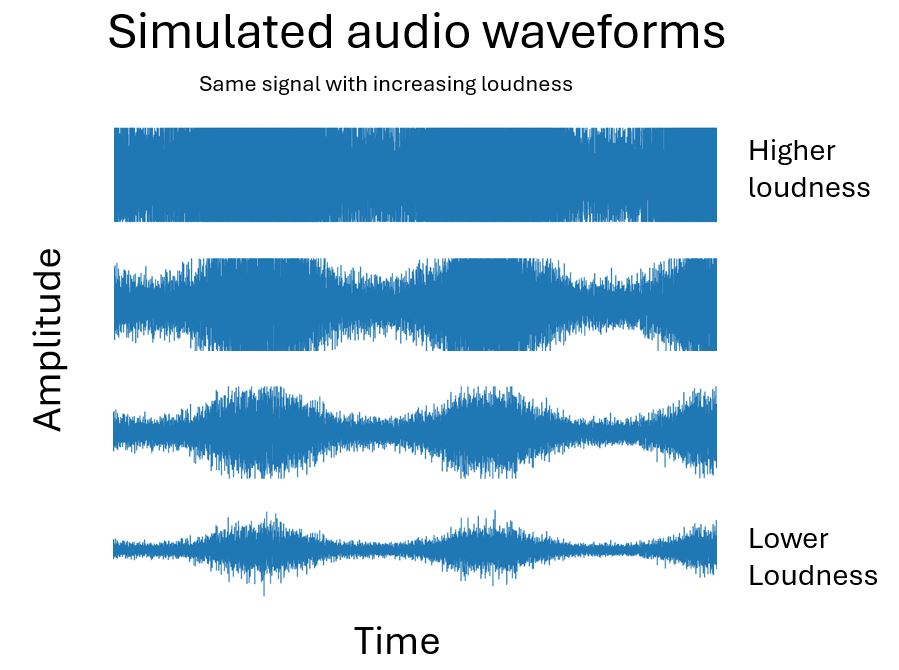
There is a legitimate reason to do this. For example, in noisy environments, like cars, gyms, clubs, etc., the quiet portions become inaudible over the background. Also, it has been shown that when comparing tracks played on the radio, people like - or at least pay more attention to - loud tracks versus quieter ones. Thus a track with lower loudness may sound better on quality audio equipment, but will be perceived as worse if played on the radio next to a louder song.
Overall the consensus is that the loudness was overdone and listenability is harmed. The period has actually been termed the "loudness wars" as labels and mastering engineers kept increasing compression/loudness to help their CDs stand out. In fact, many believe that the highly compressed CDs of the loudness war era contributed to the resurgence of vinyl and the belief that vinyl produces better, warmer sound.
The labels eventually heard the complaints about over-compression and began a third wave of remastering resulting in increased dynamic range. Unfortunately this occurred as CDs began to wane in popularity as MP3 and streaming became popular. As a result, some of these later remasters are harder to find or are more expensive due to lower production numbers.
So to summarize, often there are three main CD masterings available:
- The initial flat master.
- The second, louder, more compressed master.
- A third remaster, taking into account feedback and aiming for better dynamic range.
More recently, remixes of popular albums have begun to appear, for example the Giles Martin remix of The Beatles' Sgt. Pepper. A remix is different from a remaster: it goes back to the individual multitrack tapes to create a new two-track master. Remixing is beyond the scope of this article.
Which Master Version Is Preferred?
This is a complicated topic. For one thing, everyone hears differently, listens in different environments, on different equipment, etc. Also, the labels or artists putting out new remasters have a conflict of interest: they are motivated to denigrate previous versions in order to sell more copies of the new version.
Enthusiast sites such as the Steve Hoffman Forums often contain lively discussions where the nuances between different versions are compared. Usually, eventually, there is some sort of consensus on which version is "best," but it is still an opinion and any individual may find their listening experience differs. Information is readily available for the most popular artists and releases, but beyond that it can be hard to come by.
Measurement of Dynamic Range
A key indicator of the quality of mastering is the dynamic range of the CD - essentially measuring the difference between the quietest and loudest parts of the recording. This will reveal how much compression was introduced during the mastering process.
Several websites, most notably the "Dynamic Range Database" at dr.loudness-war.info, contain a database of the overall dynamic range of a CD by reporting a DR value, which is obtained by subjecting the digital music file to a proprietary algorithm. Generally a higher number indicates less compression and a more natural, enjoyable sound. Foobar2000 is open source software that allows users to scan CDs and generate their own DR values (that are numerically identical to those shown in the DR database).
Example: Led Zeppelin
As an example, consider Led Zeppelin, for which several mastering versions are available for most releases.
The following analysis is done using Foobar2000 testing, showing results for a single song, "Communication Breakdown" (note: album DR is not the same as track DR, but the concept is the same):
- First CD version (mastered by Barry Diament): DR = 10
- Second CD version (mastered by George Marino): DR = 9
- Third CD version (Mothership compilation): DR = 6
People report for the 2014 deluxe remaster similar results to the second CD version, but supposedly a better overall listen.
In this example, the Diament mastering has the highest dynamic range, but only slightly higher than the Marino version. The real anomaly is Mothership, which is highly compressed.
Compare just the Diament and Marino versions. Is this a large difference? No. Is it sonically important? Maybe slightly - it depends on the individual. Will serious collectors view these as different? A resounding yes.
Closing Thoughts
The above gives just a brief introduction to the concept of mastering differences. To get a full view of the situation would require a dedicated article for each major artist. Depending on your interests, digging deeper into this area can become an enjoyable and rewarding part of the hobby.