Longboxes, Hype Stickers, and Other Forgotten Ephemera from the CD Era
In addition to the music and the artwork, there are CD related items that many enthusiasts like to include in a CD collection. These items can be termed CD ephemera. They help with authenticity and context, can create a vibe, or simply make a more complete collection.
Items in this category include throwaway packaging such as the longbox, specialized CDs for setting up a stereo system, or for cleaning a CD player. There are travel storage containers unique to the CD, CD packaging opening devices, among other things.
CDs are still being made, and many accessories remain available new, sometimes as novelty retro items.
The longbox
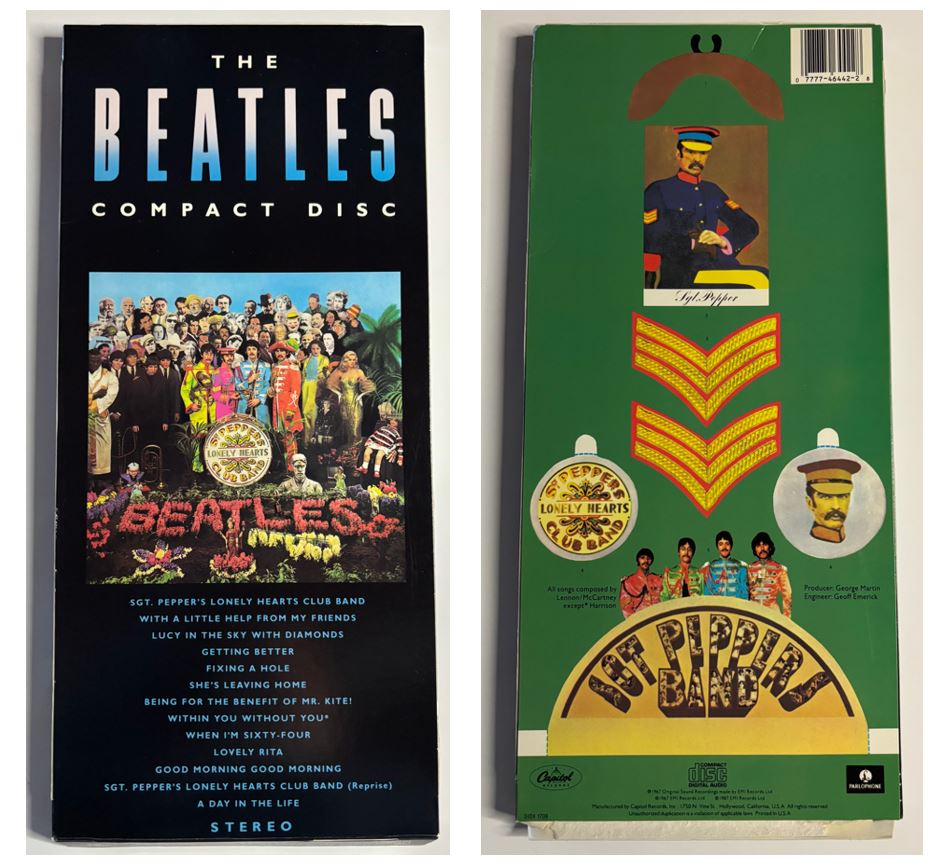
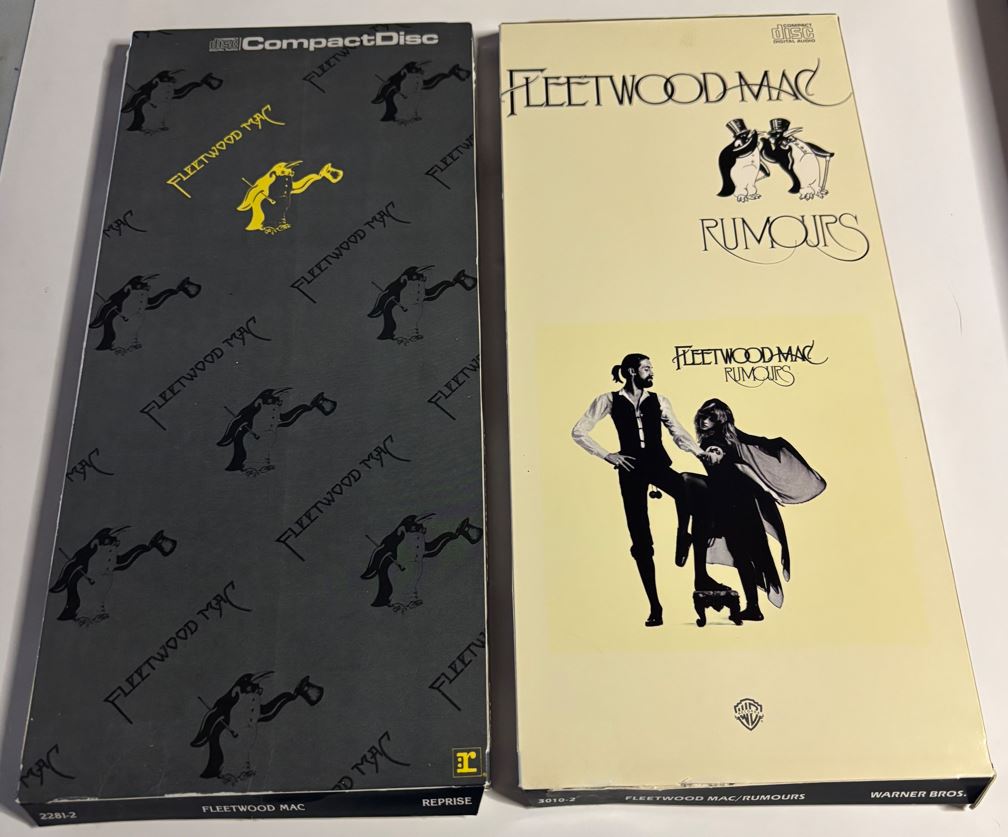
The longbox was an iconic part of how CDs were sold in retail stores from the late 1980s until early 1990s. The typical longbox was made from paperboard, the width of a CD jewel case and the length of a vinyl LP sleeve (about 5 11/16 x 12 3/8 inches). They served three purposes. The physical dimensions of the longbox allowed CDs to be displayed for sale in the existing record bins designed for vinyl LPs, the larger packaging also helped to discourage shoplifting, and the size also provided a larger canvas for art and advertising. Longboxes were common in the United States, much less so in other markets.
They eventually became subject to ridicule, even derision, as a symbol of excessive and environmentally wasteful packaging and ultimately the industry phased them out officially in 1993.
Longboxes were a considerable expense for the record labels, estimated to cost about 25 cents each, actually higher than the cost to duplicate the CD itself. Longboxes were usually made with individualized artwork to match or pair with the CD jewel case art inside.
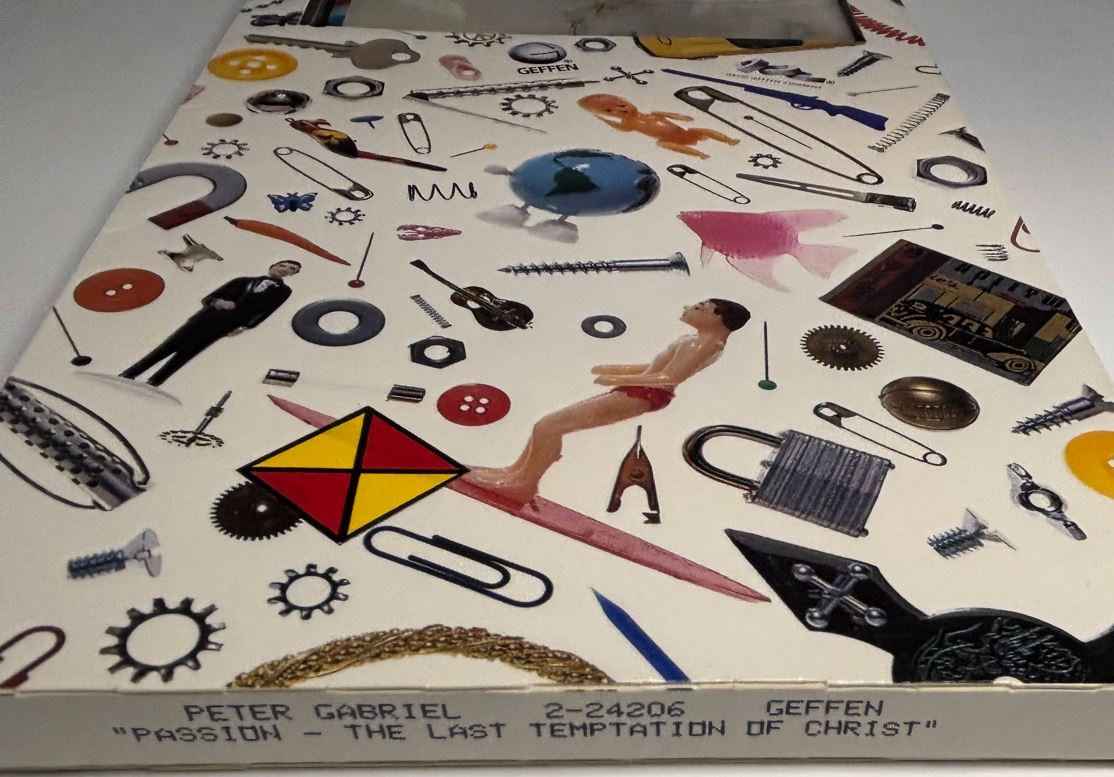
Later partially generic packaging became more common, with artwork shared across a label’s releases and the artist and title sometimes simply printed on an edge flap. There are completely generic longboxes where there is no identifying information at all on the longbox itself but the jewel case visible and identifiable through a cutaway.
Reusable plastic cases, called keepers, are also known, but these are not typically referred to as longboxes.
Similar packaging is found for cassette tapes.
Longboxes were not meant to be saved and are not commonly found. Sealed examples can be quite pricey. Some buyers carefully opened the box along one edge, saving the mostly intact longbox as a memento or collectable. However, the act of opening a longbox is partially destructive, usually requiring tearing or removing shrink wrap, then ripping open one glued flap of the longbox itself.
The market is so thin that prices are difficult to determine. New, sealed longboxes carry a high premium, largely due to the fact that it is sealed, not necessarily due to the presence of a longbox. In general opened longboxes can be found for a few dollars each on sites like eBay. But there are individual examples that can go for more. The low survivability rate may actually limit longbox collectability. If too few examples circulate, it is hard to build a collector base or establish reliable prices.
A few longboxes have art that might seem indispensable, for example the original CD issue of the Beatles Sgt Pepper had cutouts on the back of the longbox. The original vinyl release had the cutouts included on a separate cardboard insert.
A general condition guide for longboxes is:
- Shrinkwrapped, sealed
- Opened carefully on bottom to extract jewel case, otherwise shrink wrap still intact
- Opened carefully on bottom shrink wrap missing
- Opened, all flaps and box flattened to facilitate storage
Even if not looking to put together a large longbox collection, a collector today might want a few examples for a period-correct display, or just as a conversation piece.
On Discogs and other reference sites longboxes may be included in some release notes, but they are not comprehensively catalogued and there is not yet a strong community consensus on how they should be documented.
Obi Strips
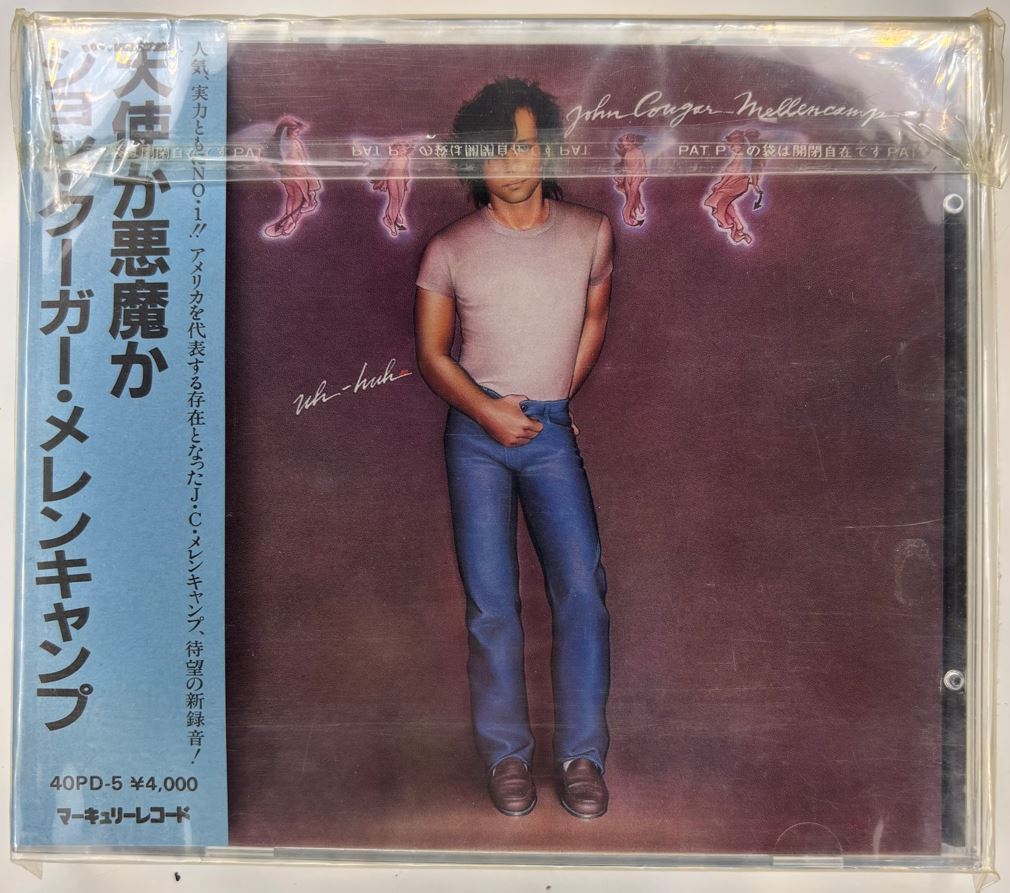
Japanese CD pressings often come with an obi strip, a paper outer wrapping covering the left 1-2 inches of the front of the jewel case and usually one spine and the back. The obi strip contains information on the title, artist, tracks, and sometimes other information in Japanese. Under the obi strip is the standard artwork.
The obi strip has a lower survival rate than the rest of the CD, and is desirable for completeness.
Japanese vinyl albums are well known for their obi strips.
Hype Stickers
Hype stickers, typically advertising a hit song, or some other feature of the release, are often adhered to the outer shrink wrap making it very hard to find except in unopened examples. Other times the sticker is placed on the jewel case itself which makes it more likely to survive, but also not replaceable if the jewel case gets damaged. The collector has to decide whether to keep the damaged jewel case with hype sticker, or replace with a generic jewel case. Of course some collectors will do both, save the broken case and put the CD in a new case.
Other inserts
Some CDs had extra sheets of paper in addition to the booklet. Order forms or flyers advertising upcoming releases for example.
For all the above, lack of any of these extras does not necessarily indicate an incomplete example, some CDs were released both with and without the extra packaging.
CD storage
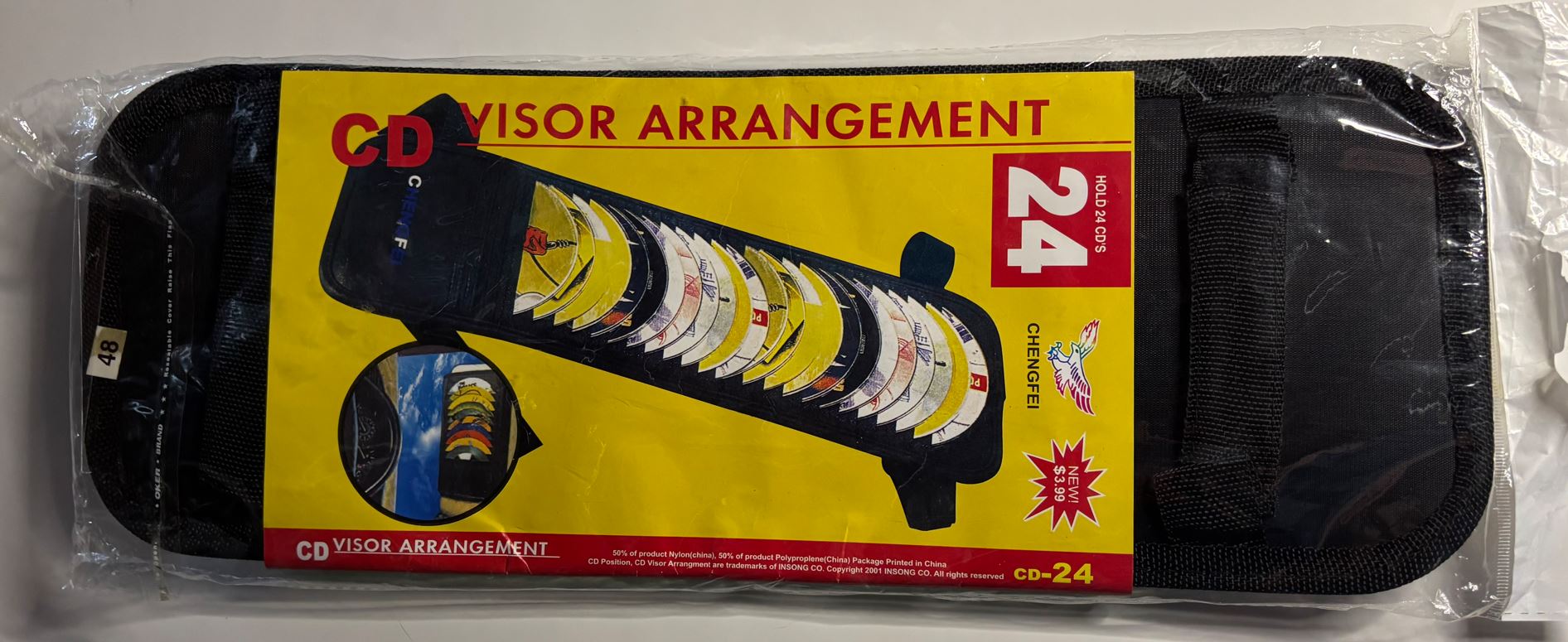
One of the big attractions for the CD is its portability especially in the car. The classic sun visor CD holder had a capacity of about 1-2 dozen CDs (no booklets). It attached to the visor with elastic bands. A great solution to the problem of CDs bouncing around the floor of a car.
CD binders were made that efficiently held CDs removed from their jewel cases with room for the booklet to be stored behind. Capacities up to several hundred are common. These are often found today for sale at garage sales, thrift stores and estate sales. Importantly they usually lack the tray card. Now, 20 or more years later the original case and tray card are long gone. Fine for listening, but missing some of the art destroys collectability value.
Cleaning, test, and demonstration discs
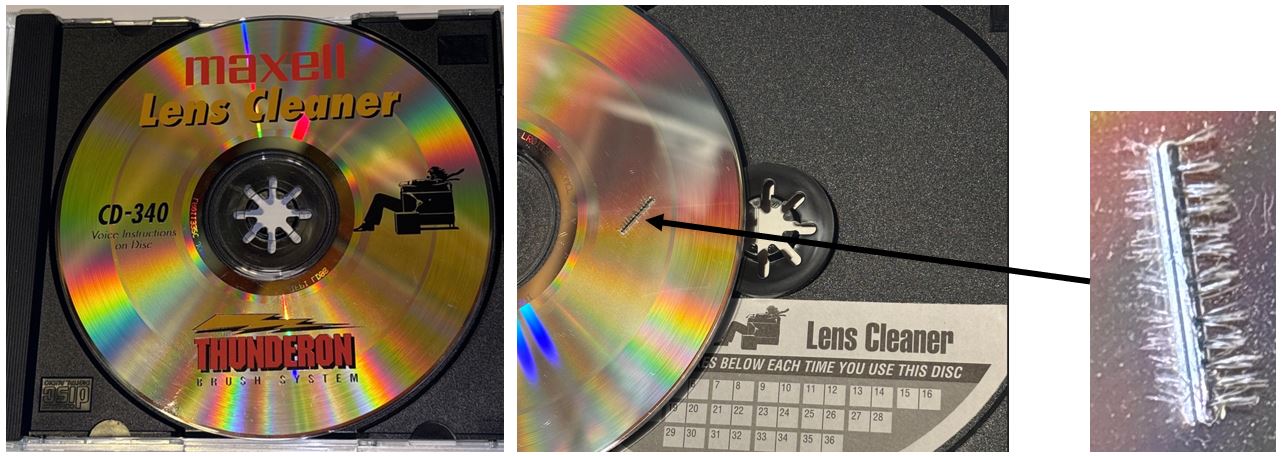
CD lens cleaners, including the iconic Maxell CD-340, have brush bristles molded into the plastic of an actual CD blank. Running this through a player helped keep the CD lens dust-free. This is not an essential accessory; most people never cleaned their CD player lenses and never experienced problems. However, if the lens is inaccessible without disassembling the player, then using a lens cleaning disc may be the most practical route.
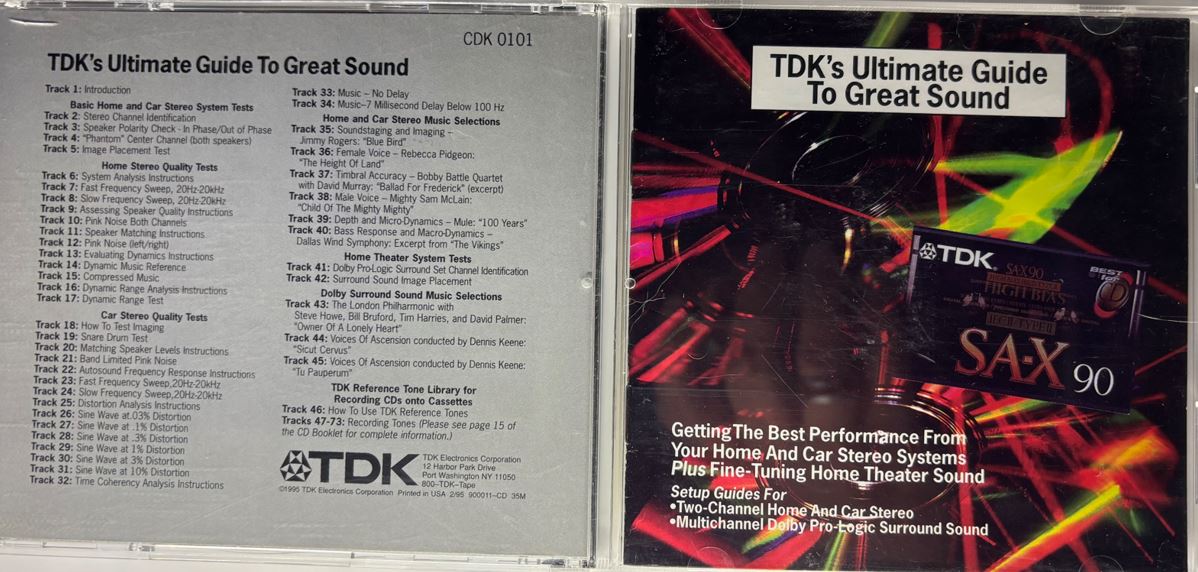
There are CDs issued as test or demonstration discs which are still useful today. These are audio discs, CDs with information on how to set up stereo systems. An example is TDK’s Ultimate Guide to Great Sound.
Other items
• 3-inch CD adapters are available which allowed a 3-inch CD to be played on systems that would not normally fit the smaller format CD.
• Many new car stereos came with a demo disc which can be collected for the CD, or as an automobile collectable.
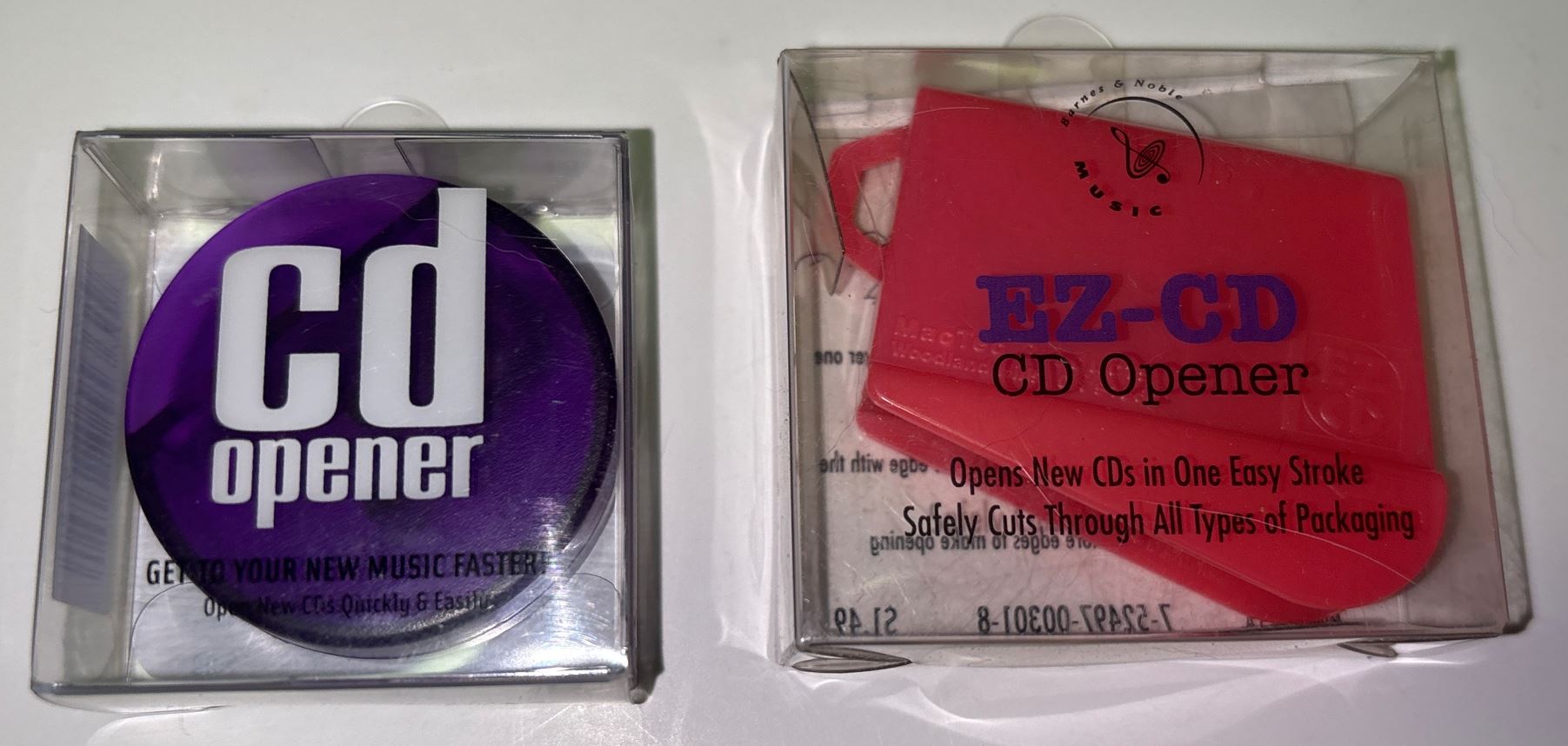
• The new CD opener, a highly specialized tool with a small hidden blade designed to safely and neatly cut the adhesive seal on a new CD, allowing the purchaser to “get to your new music faster!” Any collector who has spent time searching the bins can attest that improperly removed seals are quite common. Ironically, today, some vintage CDs are more valuable in sealed condition and may never be opened.
Green edge markers
There were several companies selling a system consisting essentially of a green felt tip pen. The user would paint the outer facing rim of the CD with a green felt tip marker. Supposedly this absorbed stray red laser light and reduced distortion and error. There were articles published at the time debunking this as snake oil. Even if you never find an actual pen system, you may still run into treated CDs.
Magazines (periodicals)
Periodicals that catered specifically to the CD market were published, notably CD Review in the US. Many other general music periodicals of the time covered CDs extensively. Some often included a CD sampler with every issue which are collectable in their own right. These magazines are an interesting adjunct to a collection, packed with hard to find information. Copies are surprisingly affordable.
This is by no means a complete listing of extras. Often these items are found when purchasing a lot of CDs. Whether to save them or not is entirely up to the individual but they can be a fun and interesting addition to a CD collection.